She Didn’t Cry or Run. She Waited Quietly Until Help Arrived
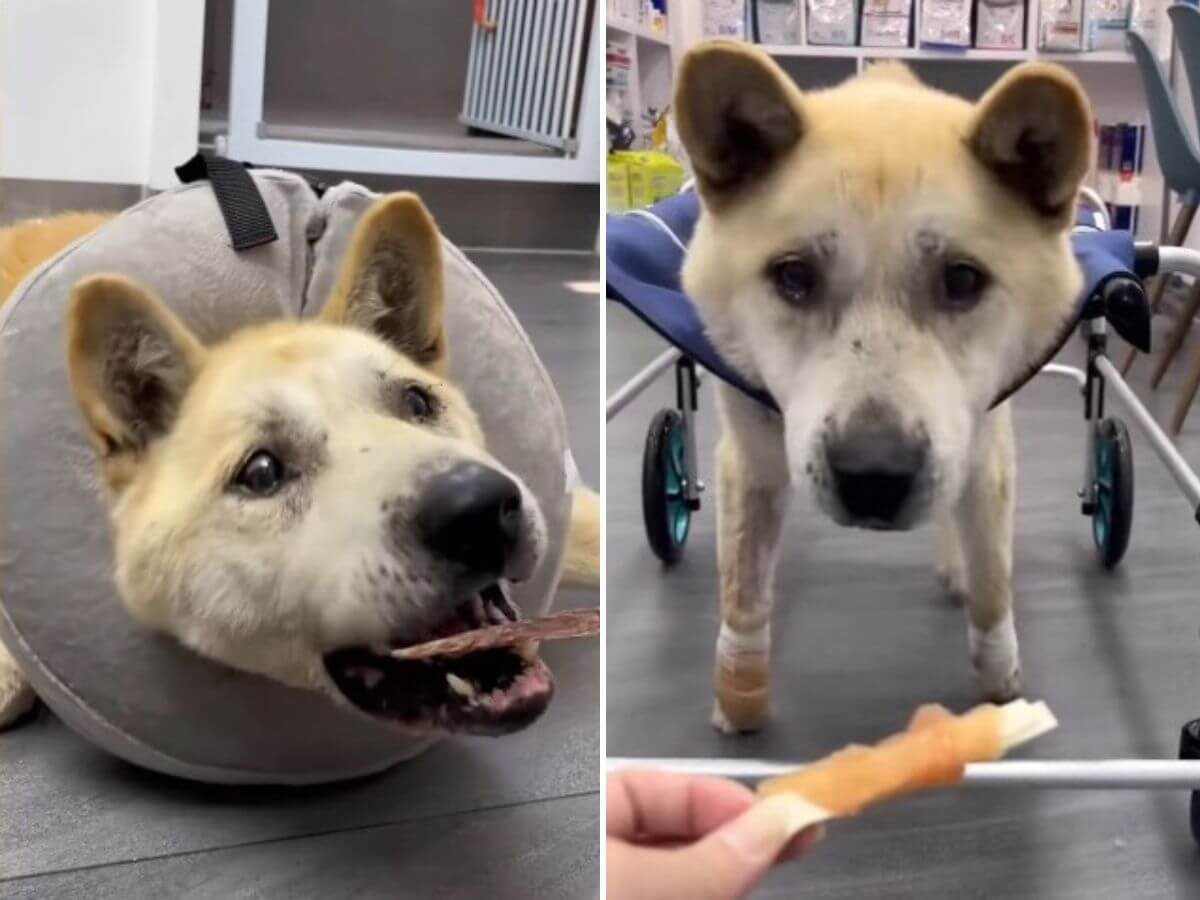
She lay still in the corner of a small yard.
Not sleeping. Not hiding. Just waiting.
Her body barely moved, yet her eyes followed everything around her. Soft. Aware. Gentle in a way that felt deliberate, not passive. In that silence, something asked to be seen.
The rescuer later noted, “Something Fragile Waited To Be Noticed.”
That moment marked the beginning of care, and the quiet dog would soon be known as Lucky.
A Dog Who Had Grown Tired, Not Hopeless
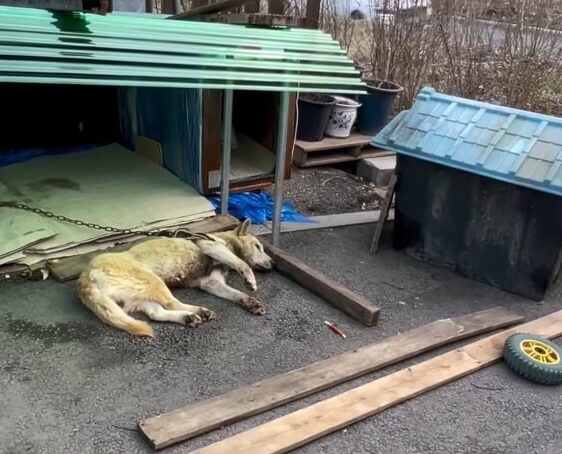
Lucky was a six-year-old female dog found resting on the ground with a thin chain still around her neck. Her body was thin. Her coat had lost its shine. Her strength was clearly low.
Yet what stopped the rescuer was not her condition.
It was her calm.
When someone approached, Lucky did not run or flinch. She slowly lifted her head and looked up, eyes tired but curious. There was no fear in her posture. No resistance.
It felt as if she had been waiting, not in despair, but in quiet patience.
Neglect Without Noise
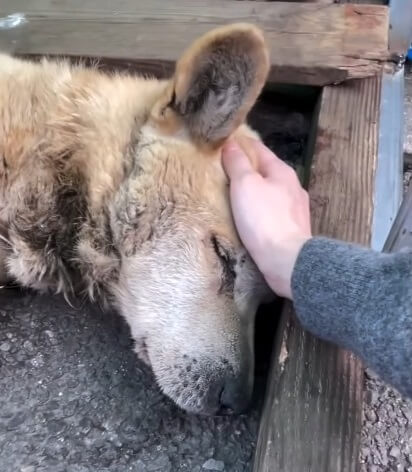
There were no signs of physical harm. No visible cruelty.
Only neglect.
Hunger. Weakness. A small wound on one leg. A body that had learned to stay still because movement demanded energy she no longer had. Lucky lay quietly not because she had given up, but because rest was all she could manage.
Long-term tethering often leads to this kind of shutdown.
According to RSPCA, “Due to the risks of tethering, it should be avoided as a means of long-term confinement, and only used in the short term and in an appropriate way that minimises the risks.”
This explains why dogs found chained for extended periods may appear withdrawn or motionless, even when they are still aware of their surroundings.
The Moment Her Story Shifted
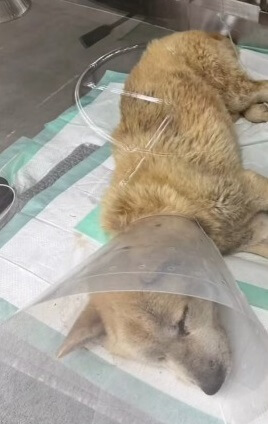
Soon after she was found, Lucky was brought carefully to a veterinary clinic.
Despite exhaustion and hunger, she allowed herself to be handled. Wrapped in warmth. Placed somewhere quiet. Given food, water, and space.
For the first time in a long while, she did not need to watch every movement around her.
That small change mattered more than it looked.
Early Care and a Body Relearning Safety
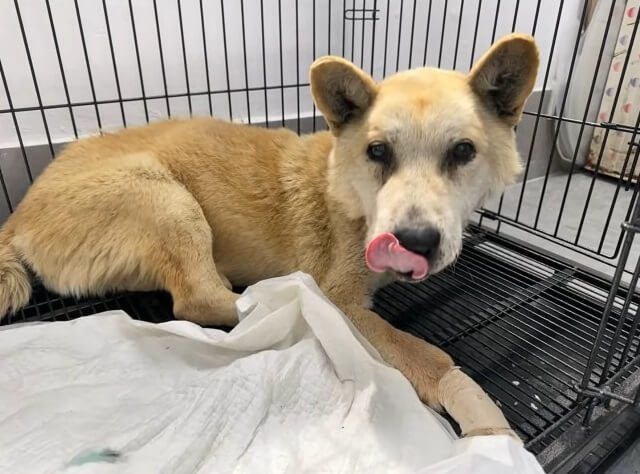
In the first days, Lucky slept often. Her body was recovering from prolonged lack of proper meals, and her energy stayed low.
When food arrived, she responded eagerly. She finished her meals, then looked up afterward, as if confirming more would come. This response is common in dogs recovering from underfeeding, and care teams move slowly for good reason.
According to MSPCA-Angell, “Animals that have been historically malnourished or those that have had minimal caloric intake for a number of days are at risk.”
Gradual feeding and calm routines helped Lucky adjust without overwhelming her system.
Healing That Arrived Quietly
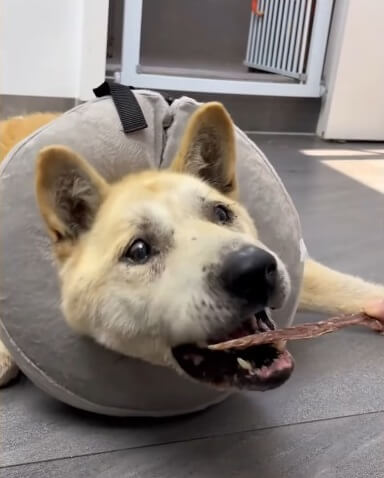
Her small leg wounds began to improve. One front leg showed nerve involvement that limited movement, but Lucky adapted calmly. She learned how to shift her weight. How to sit comfortably. How to rest without strain.
There was no panic.
Only steady adjustment.
As days passed, small changes appeared.
By the second week of care, those small changes had become consistent signs of healing.
Her breathing steadied. Her eyes, once clouded with uncertainty, began to brighten. She lifted her head when familiar footsteps approached. A gentle blink replaced guarded stares.
These moments were small, but they mattered.
Learning to Live With Limits
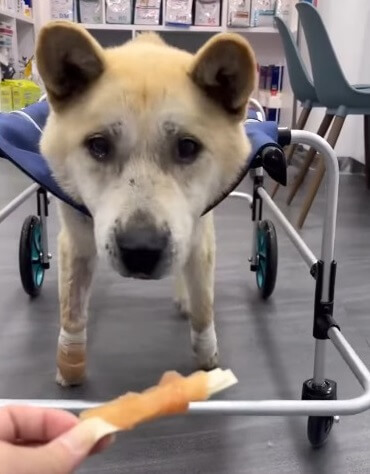
Weeks went by. Lucky ate well. She slept peacefully. She accepted care without hesitation. Touch no longer startled her. Instead, she leaned into it, her body relaxing more each day.
Her front leg never fully regained movement. Still, her overall strength improved. Her coat became cleaner and softer. She began grooming herself again, a simple act that spoke volumes about comfort returning.
Recovery involving nerve damage often takes time and may remain incomplete.
According to American College of Veterinary Surgeons, “Overall, the road to recovery after intervertebral disc disease can be a long one, usually spanning weeks to months.”
The veterinarians did not rush her progress. The caregivers stayed close, offering consistency and warmth.
What sustained everyone was not the promise of perfection.
It was her steady spirit.
Lucky Today
After nearly four months of care, Lucky was no longer the same dog found lying quietly in a yard.
Today, she lives in a sunlit home under the care of her rescuer. She moves at her own pace. Alert. Comfortable. Her eyes full of calm curiosity.
The thin, motionless dog has become a gentle, present companion.
If Lucky’s quiet strength stayed with you, please share her story. Your share could help another animal be seen.


Comments
Post a Comment