The Day Officer Hayes Found Hope Bound in Silence
Officer Hayes had responded to countless calls in his career, but nothing prepared him for the stillness of that abandoned lot. The air was quiet in a way that felt wrong, as if the world itself was holding its breath. That was when he saw the small body lying near the weeds, barely moving.
The dog was a Pitbull, young but ravaged by hunger and fear. His ribs pressed sharply against thin skin, each breath shallow and labored. What froze Hayes in place was the gray duct tape tightly wrapped around the dog’s muzzle.
The tape was not sloppy or accidental. It had been applied with intention, wound again and again until silence was forced where pain once tried to escape. In that moment, Hayes understood this was not neglect but deliberate cruelty.
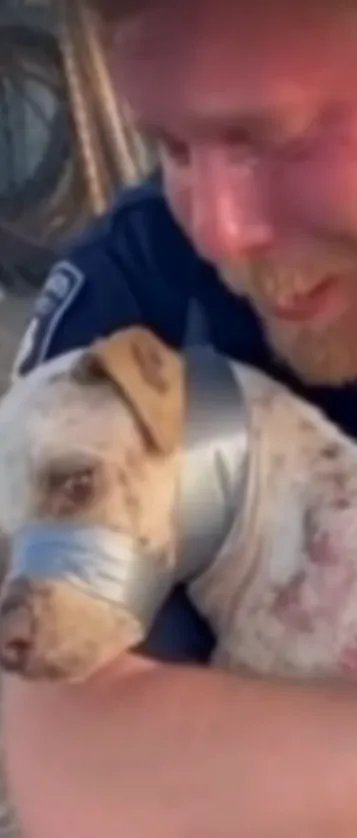
As Hayes approached, the dog did not growl or snap. He lifted his eyes slowly, and in them lived something almost unbearable to witness. Fear and hope coexisted there, trembling but alive.
Those eyes told a story without sound. They spoke of nights without shelter, of hunger that hollowed the body, of humans who passed by and chose not to see. Yet they also spoke of trust not yet extinguished.
Hayes knelt down carefully, keeping his movements slow. He had learned long ago that fear recognizes urgency. The dog flinched, but he did not retreat.
With hands trained for danger yet gentle by instinct, Hayes examined the tape. The dog’s breathing was obstructed, saliva seeping through the edges, evidence of hours or days spent unable to bark or whimper. Each second mattered now.
Hayes radioed for assistance but did not wait. He wrapped his jacket around the trembling body and lifted the dog into his patrol car. The siren remained silent, but the urgency was unmistakable.
At the veterinary clinic, the room grew heavy with tension. Staff members moved quickly yet quietly, sensing the gravity of what lay before them. The dog lay still on the table, his eyes never leaving Hayes.
The tape was removed slowly, centimeter by centimeter. Beneath it, the muzzle was raw, swollen, and marked by struggle. The damage was physical, but the deeper wounds were unseen.
When the final layer came away, the dog did not bark. He did not cry or whine. He simply exhaled, as if releasing pain he had been holding far too long.
The veterinarian explained the extent of the malnutrition. The dog’s body had been consuming itself to survive. Survival, however, had come at a brutal cost.
As fluids entered his system, the dog’s breathing steadied. His eyes fluttered closed briefly, then reopened, locking once more on Hayes. It was as though he needed confirmation that this moment of safety was real.
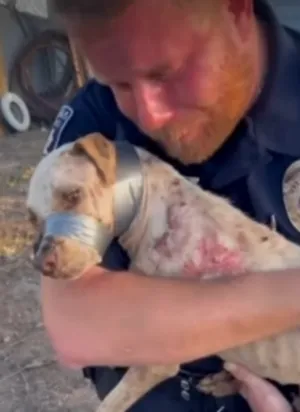
Hayes stayed long after his shift ended. He watched monitors rise and fall, counting breaths, memorizing every subtle movement. In that sterile room, a bond quietly formed.
The dog was given a temporary name while paperwork was completed. Names could come later, after survival was no longer uncertain. For now, presence was enough.
Animal control began the process of investigation. Someone had done this, and someone would need to answer for it. But justice would take time, and healing could not wait.
Over the next days, the dog began to eat small portions. Each bite was hesitant, cautious, as though he expected punishment for hunger. Hands remained gentle, voices remained soft.
His strength returned slowly, measured not in leaps or barks but in tail flicks and eye contact. Trust rebuilt itself in fragments. Each fragment mattered.
Hayes visited whenever he could. Sometimes he brought nothing but silence. Other times, he brought reassurance simply by sitting nearby.
The dog learned that hands no longer meant pain. He learned that voices no longer signaled threat. He learned that sleep could come without fear.
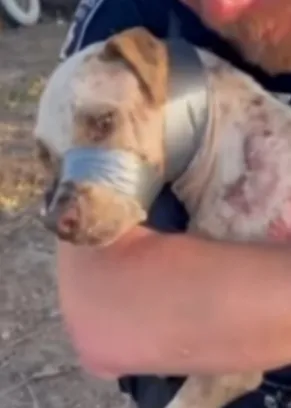
Scars along his muzzle began to heal. Fur grew thicker over protruding bones. Life, stubborn and quiet, reclaimed space inside him.
The staff watched the transformation with cautious optimism. They had seen miracles before, but they had also seen setbacks. Hope, like healing, required patience.
One afternoon, the dog stood for the first time without trembling. His legs shook, but they held. Hayes smiled without realizing he had done so.
The dog’s eyes had changed. Fear still lingered, but it no longer dominated. Hope had begun to take the lead.
This was no longer just a rescue. It was a reckoning with cruelty and a testament to resilience. A life once silenced had found a voice again.
And it all began in a deserted lot where someone chose to abandon suffering. It continued because one officer chose to stop. Between those two choices, everything changed.


Comments
Post a Comment