She Lay Frozen in Trash: What Santa Did Next Left Rescuers in Tears
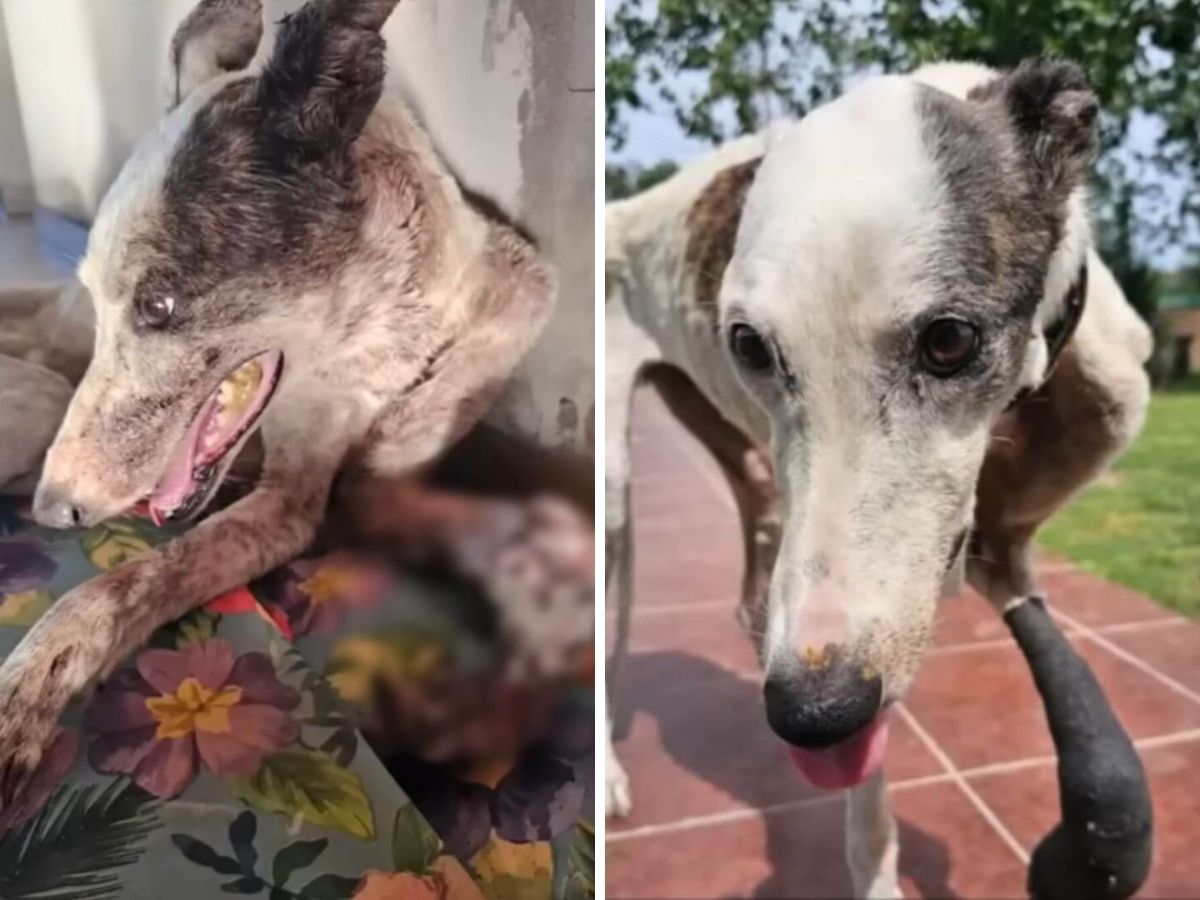
Some dogs wander, searching for scraps.
Others curl up wherever the night takes them.
Santa was different.
She had stopped moving.
When residents spotted her behind their backyard, half-hidden among trash and broken debris, they did not rush closer. They stood still, watching, trying to decide if the dog lying there was even alive.
She did not lift her head.
She did not react to voices.
Her body lay unnaturally still, pressed into the ground as if it had finally given up.
No one knew her name then.
No one knew how long she had been there.
What they did know was this.
A dog does not lie down like that unless something is terribly wrong.
And yet, against everything it looked like, Santa was still breathing.

When Standing Back Was No Longer an Option
At first, the homeowners watched from a distance. They were unsure if the dog was even alive. Her body looked unnaturally thin. Her breathing was barely visible. Each passing minute made the silence heavier.
“She wasn’t moving at all,” one witness later said. “It felt like we were looking at a body, not a living dog.”
One woman could not look away.
She built a small wooden shelter near Santa, hoping to shield her from the sun and wind. It was not a rescue yet. It was not a plan. It was instinct.
Then she did the one thing that changed everything.
She asked for help.
That call reached Hogar Amor de Galgo, a rescue group familiar with suffering, but unprepared for what they were about to find. The case was later shared publicly by Dogs Are Family, allowing the world to witness Santa’s fight to survive.
“When we arrived, she was extremely weak,” one rescuer recalled. “She was lying there close to death. Her body was ice cold.”
Ants crawled across her skin. Fleas clung to her coat. When rescuers touched her, the cold startled them.
“I remember thinking, I hope she isn’t dying from hypothermia,” one rescuer said quietly.
Dogs left exposed without food or shelter can lose the ability to regulate body temperature. Veterinary guidance explains that when body heat drops, organs begin to struggle, even in environments that do not feel extreme to people.
By the time Santa was found, her body was already losing that fight.
The Longest Drive They Could Remember

They lifted her gently. Santa barely responded.
“The hour it took to get her to the veterinarian was the longest hour of my life,” a rescuer shared. “I watched every breath she took. Every second felt critical.”
Santa struggled to breathe. Her body trembled. Still, she held on.
At the clinic, the picture began to come together. Santa was about three years old. A hunting dog. A type of dog that rarely ends up on the streets unless something has already gone very wrong.
“She was abandoned,” the rescue team said. “And we quickly understood why.”
Santa’s front left leg was destroyed.
The tissue had rotted. Worms had eaten through muscle. Infection had spread too far to stop. There was no way to save it.
Before treatment began, rescuers gave her a dignity bath.
Only then did the full extent of her condition become clear. Severe malnutrition. A flea infestation so heavy it had drained her strength. Bloodwork confirmed parasites, a common and dangerous burden in dogs left untreated for long periods. Veterinary experts warn that infestations like these can lead to anemia, immune collapse, and organ stress.
Antibiotics and pain medication began immediately.
Then came another discovery.
The Infection No One Could See
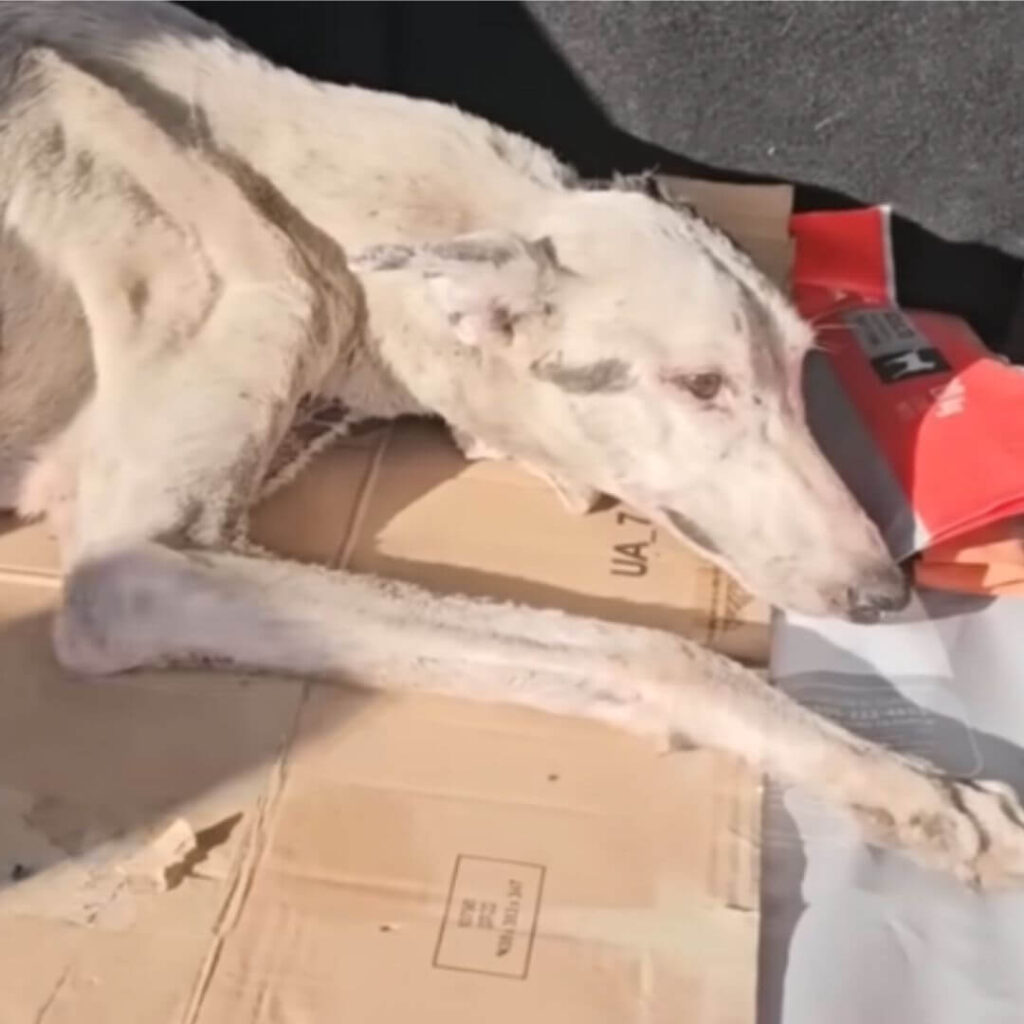
“There was a purulent discharge,” one rescuer said. “We knew something else was very wrong.”
An ultrasound confirmed a severe uterine infection known as pyometra. Left untreated, it can quickly become fatal. Veterinary literature explains that the infection spreads toxins through the bloodstream, placing enormous strain on the body.
Santa’s blood values were described as catastrophic.
“She needed a blood transfusion,” the team said. “Otherwise, she would not survive surgery.”
The decision was immediate.
Two surgeries. One chance.
An emergency spay to remove the infected uterus. Then, the amputation of her destroyed leg.
“We were terrified,” a rescuer admitted. “But we knew this was her only chance.”
They waited.
Against expectation, Santa survived both procedures.
“The pain that had tortured her for so long was finally over,” the team shared.
What she left behind on that operating table was a past shaped by neglect. What came next was uncertain, but finally possible.
The First Signs of Life Returning

Just three days later, Santa was discharged and placed in a foster home.
What happened next surprised everyone.
“She started eating with enthusiasm,” her foster shared. “Her strength came back. Her eyes changed.”
Learning to walk on three legs took time. There were falls. There were pauses. Still, Santa tried again.
Follow-up visits showed clean healing. Stitches were removed. Veterinarians praised her progress.
“Everyone was so happy with how far she’d come,” the rescue team said.
Today, Santa runs.
She plays with other dogs. She moves freely, no longer trapped by pain. The dog once found frozen among trash now bursts with energy.
“This is Santa,” her rescuers say proudly. “Our wonderful girl.”
She lives surrounded by safety and care. A life no one imagined possible on the day she was found lying still behind a backyard.
Why Santa’s Story Matters

Santa survived because someone noticed.
Because someone asked for help.
Because a rescue team refused to look away.
And somewhere right now, another dog is still waiting to be seen.
Her story is not rare enough. Dogs are still waiting in silence, unseen, their bodies failing long before anyone looks their way.
Sharing stories like Santa’s helps rescues reach those dogs sooner.
Sometimes, one share really does change a life.
You can also see her rescue video, which was shared by Dogs Are Family YouTube Channel:


Comments
Post a Comment