She Was Found Trapped in Wires. Then Her Heartbeat Changed Everything
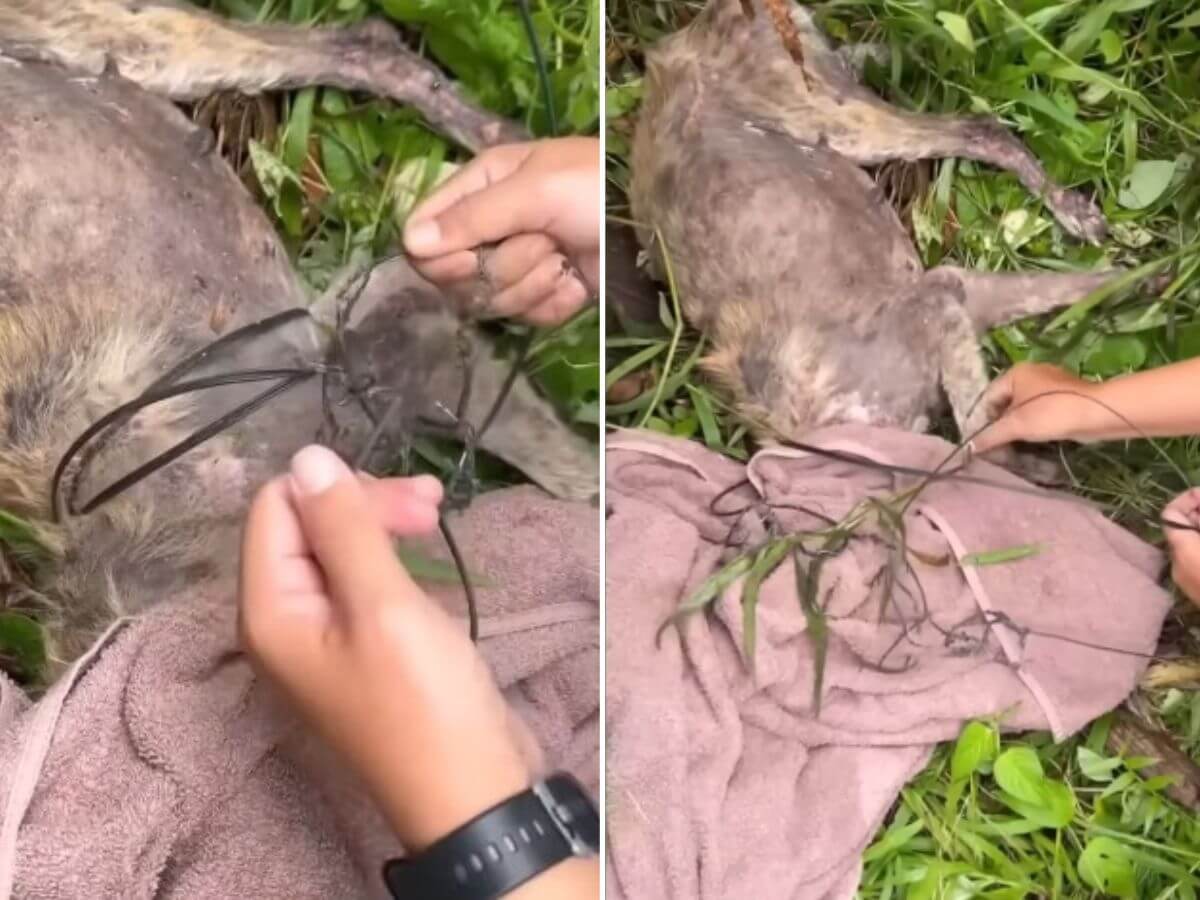
When rescuers first saw her, she did not even have a name.
She was crumpled beside a pile of trash, thin copper wires wrapped tightly around her small body. Her chest rose unevenly. Her head rested against the ground. For a moment, it was hard to tell if she was still fighting.
If you had passed by that alley, you might have assumed it was too late.
There was no barking. No movement. Only the faint rhythm of breath trying to stay steady.
This rescue was carried out by LITTLE STEPS MATTER and later shared through a video uploaded on the Dog Haven YouTube channel. What viewers witnessed was not chaos. It was something quieter. A fragile body on the edge of giving up.
But her heart was still beating.
And that small, stubborn rhythm changed everything.
Trapped While Searching for Food
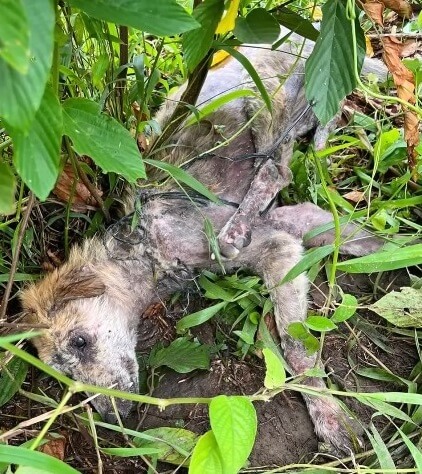
She had likely been scavenging.
Stray dogs survive on scraps, pushing through trash and debris in search of something edible. Stray animals face significant risks, including starvation, disease, and injury.
That risk is not abstract. It plays out in alleyways like this one, where hunger forces movement into dangerous spaces.
Somewhere in that search, the wires tightened around her.
The more she struggled, the tighter they cinched. Copper strands pressed into her ribs and neck. By the time rescuers reached her, she had collapsed.
According to rescuers, she was “Lying motionless…” Her breathing came in shallow attempts. She tried once to lift her head. Then again. Each effort weaker than the last.
When a dog stops reacting, the body may already be under severe stress.
Cornell University’s College of Veterinary Medicine warns, “Respiratory distress is a serious medical emergency that occurs when a dog cannot get enough oxygen to meet its body’s demands and requires immediate attention.”
Watching her struggle for air, the team understood that this was no longer about wires. It was about oxygen.
Every second mattered.
A Rescue Measured in Heartbeats
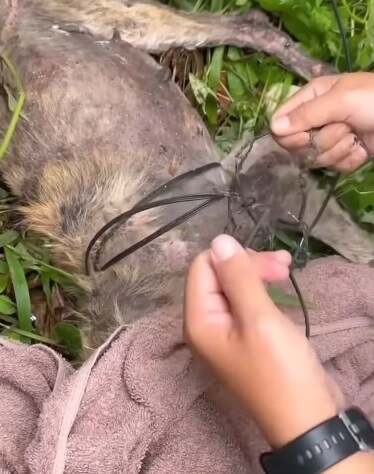
The wires were tightly twisted. Quick movements could cause further damage.
The rescuers kept their voices low. Their hands moved slowly.
One team member later recalled, “We carefully untied those wires,” describing how deliberate each motion had to be.
There was no pulling. No sudden force.
Wire by wire, they loosened the strands. They supported her head. They stabilized her body before attempting to shift her.
Entanglement around the neck or chest can compromise breathing even after the restraint is removed.
The MSD Veterinary Manual advises, “If a pet has neck or throat injuries from strangulation (for example, from hanging by a collar), take it to the vet immediately.” Internal damage is not always visible.
When the final strand slipped free, her body shifted slightly.
She inhaled more deeply.
She was still weak. But she was still there.
The team lifted her carefully and drove straight to the clinic. There was no hesitation. The American Red Cross makes it clear, “Immediately take the dog to a veterinary hospital.” That urgency guided every mile of the drive.
A Body Worn Down by the Street
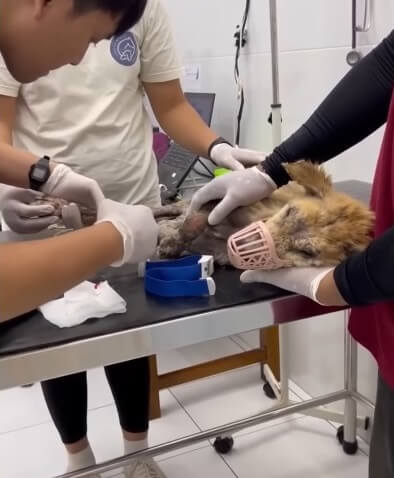
At the clinic, the reality became clearer.
She was severely underweight. Her muscles had thinned. Her body had been surviving on almost nothing for far too long.
Life on the street is constant exposure. It means searching for scraps while avoiding danger. It means weather without shelter and meals that are never guaranteed. Over time, that kind of survival strips strength from the body and resilience from the immune system.
Her condition reflected the very risks stray animals face every day: hunger, illness, and injury.
Veterinarians monitored her breathing closely. Oxygen levels were checked repeatedly. Fluids were administered slowly to avoid overwhelming her system. Even after the wires were removed, her body needed careful stabilization.
Day one focused on restoring hydration and supporting her breathing.
Day two introduced cautious feeding. Small portions. Gradual increases to avoid stressing her weakened system.
By day three, she could lift her head without trembling. By the end of the first week, her eyes followed movement across the room. When a volunteer spoke softly, her ears shifted toward the sound. On the eighth day, she managed to push herself up briefly before settling back down, exhausted but determined.
Recovery was not dramatic.
It was incremental.
And incremental progress meant she was still fighting.
Rest, Light, and a Name
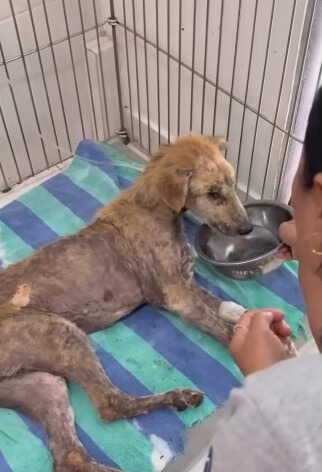
Today, she rests at the clinic without wires pressing into her skin.
She sleeps stretched out instead of curled defensively. When volunteers approach, she opens her eyes rather than remaining frozen. She leans slightly into touch.
The team from LITTLE STEPS MATTER visits her regularly. They bring her outside for brief moments so she can feel sunlight and fresh air. Each outing builds strength. Each quiet interaction rebuilds trust.
Soon, she will receive something she has never had.
A name.
Naming matters. It signals that someone expects you to stay. It marks the beginning of identity.
This dog was once a silent shape tangled in debris.
Now she has oxygen. She has medical care. She has hands that return for her.
And soon, she will have a name that reflects survival.
If her story stayed with you, share it. Someone else may see it and learn what to do when a life hangs on something as small as a heartbeat.


Comments
Post a Comment