She Was Stabbed Twice and Left to Die. A Rescuer Gave Her a Second Chance
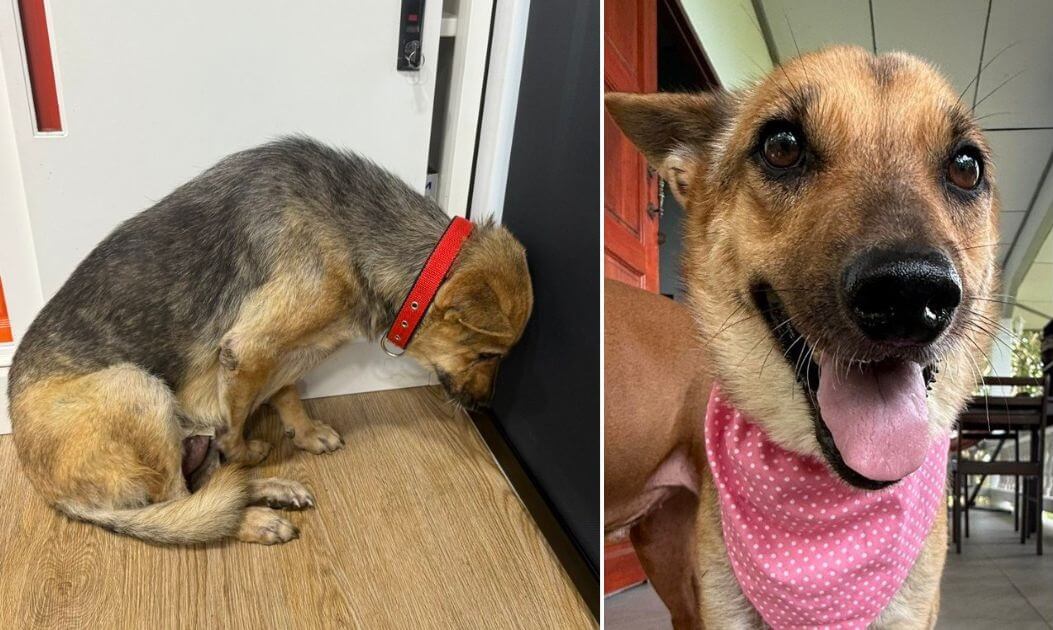
When rescuers first learned about Chance, they struggled to process what they were seeing.
A ten-year-old dog, stabbed twice in the stomach, left to die, and so emotionally shattered that she barely moved.
Questions rose instantly.
Who could do this?
Why would anyone harm a defenseless senior dog?
Chance had survived a decade without safety, affection, or shelter. After the stabbing, she retreated so deeply into fear that she stopped responding to the world around her. She had every reason to shut down forever.
But one man stepped in. And because of him — and one unexpected canine friend — Chance’s life began again.
Chance’s rescue was first shared by rescuer Niall Harbison, who provided photos and updates from her recovery.
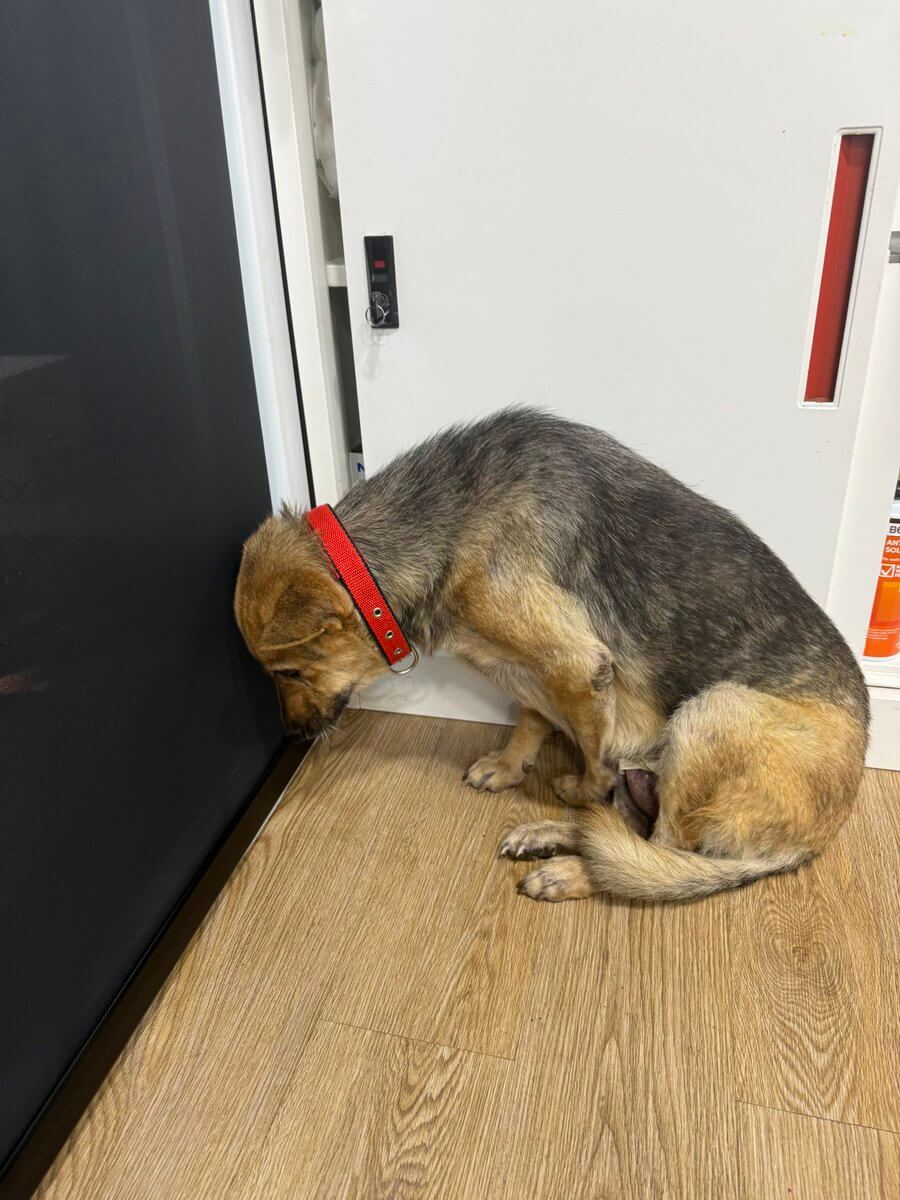
The Moment She Was Found: A Dog Frozen by Trauma
Rescuer Niall Harbison had witnessed suffering before, but Chance’s state left an imprint he couldn’t shake.
She didn’t bark.
She didn’t growl.
She didn’t make eye contact.
She simply stayed still, her body tight and her mind somewhere far away.
Research on abused dogs helps explain this reaction. A study published on PubMed found that canine victims of abuse often exhibit extreme fear, avoidance, and emotional withdrawal — behaviors that mirror Chance’s frozen posture.
Another behavioral summary from Companion Animal Psychology describes how abused dogs may enter a “shut-down” state, especially when the trauma has been repeated or severe.
Chance wasn’t being “difficult.” She was showing the psychological scars of violence.
And it was showing on her rescuer too.
There were days I wondered if she even knew kindness existed. Every approach was a tiny victory — the smallest wag, the softest breath beside me — and those were the moments that kept me going.— Niall Harbison
Why Some Abused Dogs Go Completely Still
Fear in dogs doesn’t always look loud.
It can look like silence.
Stillness.
Disconnection.
Veterinary behavior guidelines from the American Animal Hospital Association (AAHA) explain that traumatic experiences can trigger intense fear responses that make dogs freeze when approached — particularly when they don’t know whether a human intends harm or safety.
For an older dog like Chance, these responses can become deeply ingrained.
At ten years old, she had spent most of her life navigating danger, so retreating into invisibility was her only survival strategy.
Stab Wounds, Infection, and the Slow Process of Stabilization
Physically, Chance’s situation was dire.
Her stab wounds were infected.
Her body was thin.
Her movement was stiff and guarded.
Although medical records of her exact treatment weren’t published, veterinary studies on sharp-force injuries show that untreated wounds can lead to internal infections, organ damage, and systemic shock — especially in senior animals already weakened by years on the streets.
Her first days after rescue were focused on cleaning the wounds, treating infection, restoring hydration, and introducing small, safe meals.
Every gentle touch placed her on alert.
Every approach made her flinch.
But the rescue team kept showing up.
Slowly, her breathing softened.
Her muscles relaxed.
Her eyes began to shift from fear to curiosity.
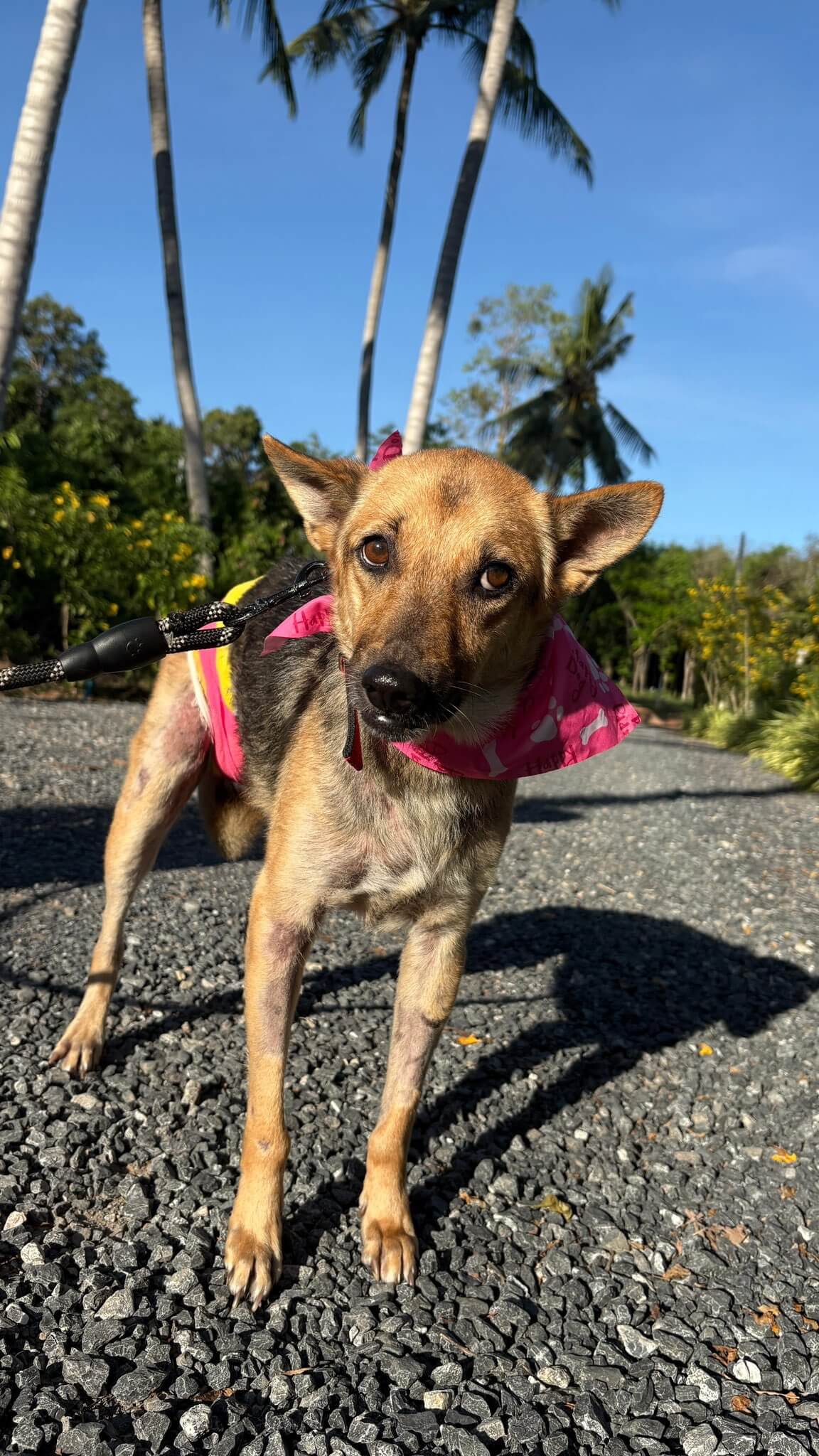
Relearning Life Inside a Home for the First Time
Three weeks into the rescue, Chance entered a home for the very first time.
Ten years old — and she had never been indoors.
Dogs with significant trauma often struggle with new environments. The unfamiliar sounds, walls, and flooring can trigger confusion or panic
Chance responded by shrinking into corners, unsure where she was allowed to exist.
But inside that home, something remarkable happened.
She met Hank.
The Role of Helper Dogs: How Hank Helped Chance Learn to Live Again
Hank was a calm, confident dog — exactly the kind of presence fearful dogs often rely on.
Through simple, everyday moments, he showed Chance what safety looked like:
Eating without fear.
Walking without scanning for threats.
Resting without bracing for harm.
Behaviorists often refer to this as social learning. Senior dogs like Chance can mirror the reactions of stable dogs around them, gaining confidence from their calmness.
Gradually, her tail rose.
Her head lifted.
Her steps loosened.
Chance watched Hank’s certainty and began to believe she might be safe too.
Violence Against Street Dogs: A Widespread Crisis
Chance’s case is horrific — but it isn’t isolated.
According to Four Paws, referencing World Health Organization data, there may be nearly 200 million stray dogs around the world — many facing hunger, human hostility, and untreated injuries.
The World’s Veterinary Journal reports that stray dog populations are so high that an estimated 4–5 million dogs are euthanized globally each year.
Street dogs in Southeast Asia face additional risks. An investigative report by Southeast Asia Globe highlights violence, neglect, and fear-based retaliation against dogs in Thailand, where many battles for survival mirror what Chance endured.
Chance’s story reflects a crisis spanning continents.
Why Senior Dogs Are the Most Vulnerable
Older dogs are at a greater disadvantage on the streets and inside shelters.
Research from Maddie’s Fund found that senior dogs experience far lower adoption rates and lower survival outcomes compared to younger dogs.
This vulnerability makes senior rescues — like Chance — incredibly rare.
Most never live long enough for someone to intervene.
Understanding Why Dogs Are Abandoned or Attacked
Violence against street dogs can stem from fear, misinformation, poverty, or simple disregard.
A review published through the National Institutes of Health examined abandonment patterns in Latin America and found direct connections between community stress, economic struggles, and increased hostility toward stray animals.
Chance wasn’t stabbed because she did something wrong.
She was harmed because vulnerable animals often exist at the mercy of the wrong human at the wrong moment.

Chance Today: The Eyes Tell the Story
Chance still carries her scars, but her eyes are no longer clouded by fear.
They’re open. Soft. Present.
She eats calmly.
She walks with confidence.
She sleeps without flinching.
She is no longer invisible.
Her life now reflects what dogs like her can become when someone chooses compassion over convenience — and patience over judgment.
How You Can Help Dogs Like Chance
Every reader can play a part in reducing cruelty:
- Learn the signs of abuse: shaking, freezing, untreated wounds, fear of touch.
- Report cruelty to local animal control or law enforcement as soon as you suspect it.
- Support senior dog rescues — they have some of the lowest adoption chances.
- Share stories like Chance’s to grow awareness about violence against strays.
- Encourage humane street-dog management, including sterilization efforts and community education programs.
One share, one report, or one donation can help rewrite another dog’s story.
She Has a Second Chance — And She Gave One Back
Chance shows us that trauma doesn’t disappear.
It heals inch by inch, moment by moment, through safety, routine, and trust.
Her survival is a reminder that even the most broken souls can learn to live again when someone finally sees them.
If Chance’s story moved you, consider sharing it to help more senior strays get seen.


Comments
Post a Comment